Introduction: Search Is No Longer Just Google
The way people search for information is changing rapidly. Instead of typing keywords into Google, users are now asking questions directly to AI tools like ChatGPT, Google Gemini, Perplexity, and AI-powered search engines.
This shift has created a new concept called AIO – AI Optimization.
If your content is not visible to AI systems, you risk losing future traffic, leads, and brand authority.
In this guide, you’ll learn how to rank your content in ChatGPT, Gemini, and AI search engines, and how to prepare your website for the next generation of search.
What Does “Ranking in ChatGPT & AI Search” Mean?
AI search engines do not rank websites the same way Google does.
Instead of showing 10 blue links, AI tools:
-
Analyze trusted sources
-
Summarize answers
-
Recommend websites, brands, and experts
-
Pull data from high-authority, well-structured content
Your goal is not just rankings — it is being referenced, cited, or recommended by AI.
Why Traditional SEO Alone Is Not Enough Anymore
Traditional SEO focuses on:
-
Keywords
-
Backlinks
-
Meta tags
-
Rankings
AI search focuses on:
-
Content quality & clarity
-
Topical authority
-
Trust & expertise
-
Structured, factual information
That’s why many people say “SEO is dead” — but the truth is:
❌ SEO is not dead
✅ Low-quality SEO is dead
How ChatGPT & Gemini Choose Content Sources
AI tools prefer content that is:
-
Helpful and human-written
-
Well-structured (headings, lists, FAQs)
-
Updated and accurate
-
From websites with real-world authority
-
Supported by examples, data, or experience
This is where AIO (AI Optimization) comes in.
Step-by-Step Guide to Rank Content in AI Search Engines
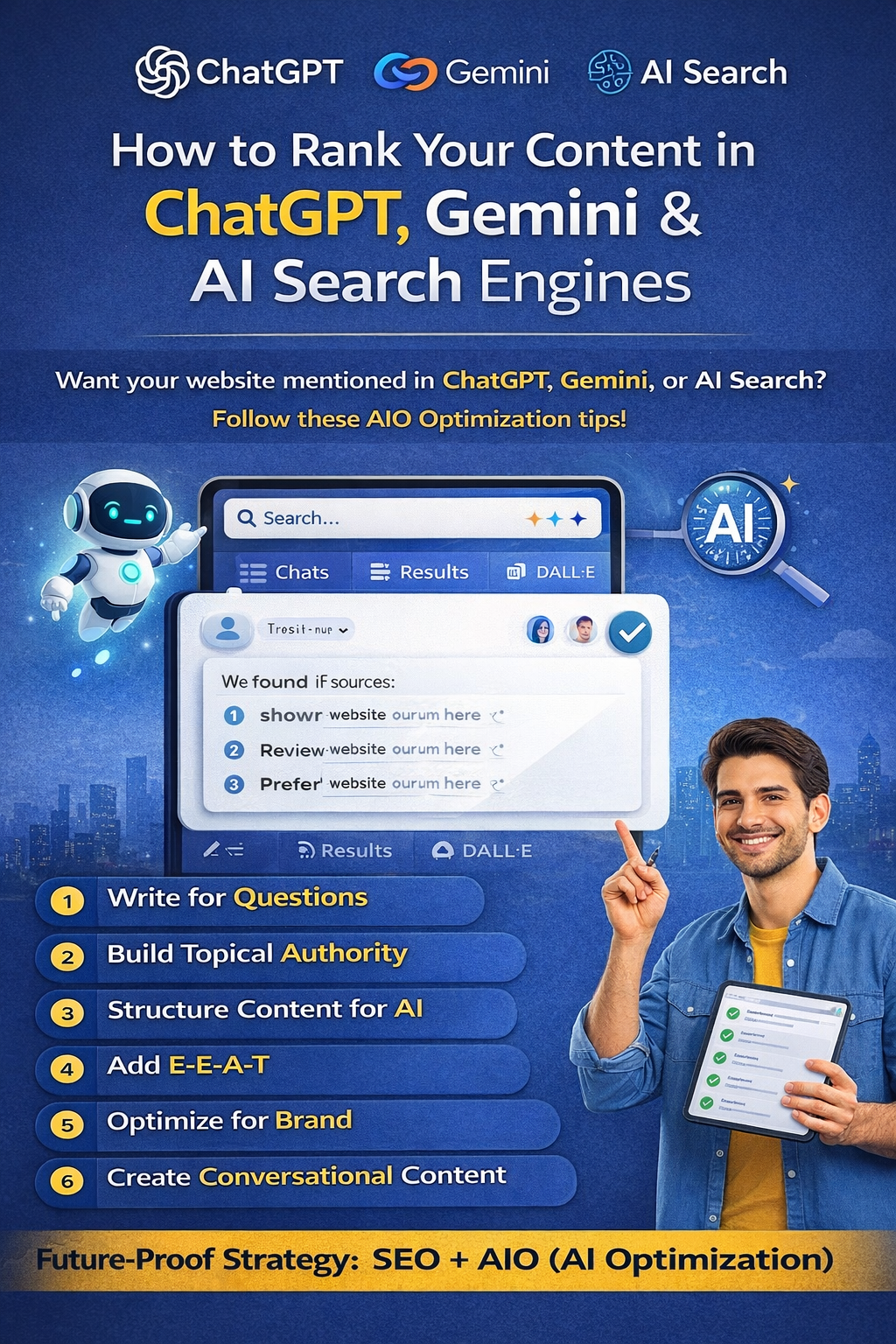
1. Write for Questions, Not Just Keywords
AI tools answer questions, not keywords.
❌ Old SEO:
“AI search ranking tips”
✅ AIO-friendly content:
-
How does ChatGPT select sources?
-
How can businesses appear in AI search results?
-
Can AI recommend my website?
Use question-based headings (H2, H3).
2. Build Topical Authority (Not Just One Blog Post)
AI prefers websites that cover a topic deeply.
Example:
If your niche is Digital Marketing, create content on:
-
AI in SEO
-
AIO strategies
-
Google Gemini updates
-
AI content optimization
-
Future of search
Multiple related articles = AI trusts you more
3. Structure Content for AI Understanding
Use:
-
Clear headings (H1, H2, H3)
-
Bullet points
-
Numbered steps
-
Short paragraphs
-
Definitions and summaries
AI scans structure before meaning.
Well-structured content = higher AI visibility
4. Add “Expert Signals” (E-E-A-T)
AI engines value:
-
Experience
-
Expertise
-
Authority
-
Trustworthiness
How to improve this:
-
Add author bio
-
Mention years of experience
-
Show real examples or case studies
-
Link to trusted sources
-
Keep content updated
AI prefers real experts, not generic writers.
5. Optimize for Google Business Profile & Brand Mentions
AI tools rely heavily on:
-
Brand searches
-
Online mentions
-
Business profiles
Action steps:
-
Optimize your Google Business Profile
-
Keep NAP (Name, Address, Phone) consistent
-
Get genuine reviews
-
Maintain social media presence
Strong brand = more AI recommendations.
6. Create AI-Friendly Content Types
AI prefers:
-
How-to guides
-
Comparisons
-
FAQs
-
Explainers
-
Step-by-step tutorials
Example titles:
-
“How AI Search Works in 2025”
-
“SEO vs AIO: What’s the Difference?”
-
“How Small Businesses Can Get Leads from AI”
7. Use Conversational, Natural Language
Write like humans speak.
❌ Keyword stuffing
❌ Robotic language
✅ Clear, conversational tone
✅ Simple explanations
AI is trained on human conversations, not keyword lists.
8. Update Old Content Regularly
AI prefers fresh and updated information.
Best practice:
-
Update blogs every 6–12 months
-
Add new sections
-
Refresh examples
-
Mention latest trends
Updated content = higher AI trust.
SEO vs AIO: What’s the Difference?
| SEO | AIO |
|---|---|
| Focus on Google rankings | Focus on AI recommendations |
| Keywords | Topics & intent |
| Backlinks | Authority & trust |
| Traffic | Visibility + credibility |
| Search engine | AI engines + assistants |
Future-proof strategy = SEO + AIO together
Is Blogging Dead Because of AI?
No.
But low-quality blogging is dead.
Blogs that:
-
Solve real problems
-
Show expertise
-
Are structured well
-
Provide original insights
These blogs will dominate AI search results.
Final Thoughts: The Future of Search Is AI-First
To rank in ChatGPT, Gemini, and AI search engines:
-
Stop chasing keywords only
-
Start building authority
-
Write for humans and AI
-
Focus on trust, clarity, and depth
Those who adapt early will win the next decade of digital visibility.
Want Help With AI Optimization (AIO)?
If you want to prepare your website or business for AI-driven search, focus on:
-
Content strategy
-
Brand authority
-
Google Business Profile optimization
-
AI-ready SEO structure
The future belongs to AI-optimized brands.